
Smart Vending Machines, Robotics, and AI: The Business Ecosystem of the Future
Perfect. I'll research the convergence of smart vending machines, robotics, and artificial intelligence, and why this represents a key opportunity for entrepreneurs and technologists. I'll also include current examples, future projections, and business opportunities with an inspiring and futuristic approach.
I'll let you know once the content for Ciaespinoza.com's blog is ready.
Smart Vending Machines, Robotics, and AI: The Business Ecosystem of the Future
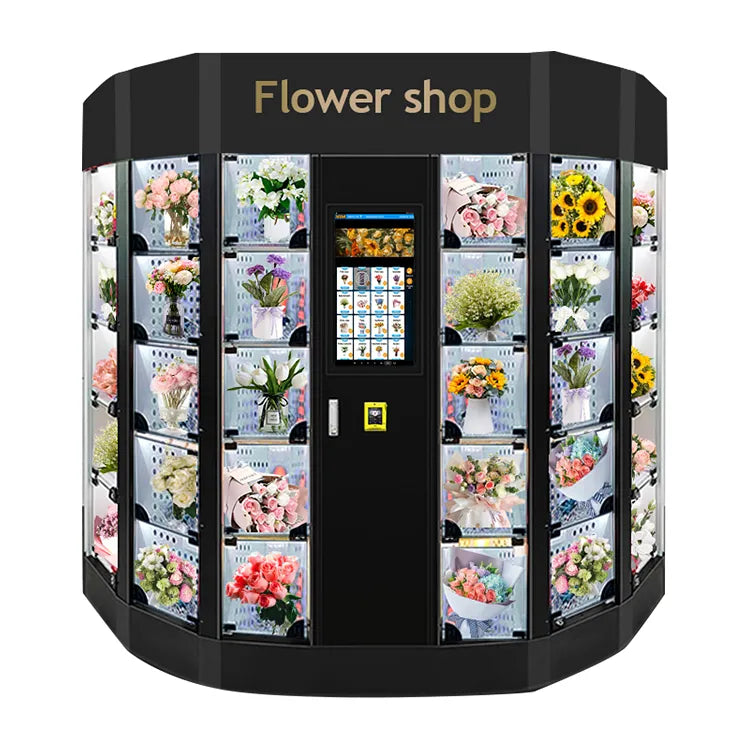
(The Future of Vending: How Robotics is Revolutionizing the Industry — Kinetic Retail Group) Conceptual sketch of a smart vending machine, equipped with sensors and connectivity. These modern machines represent the union of robotics and AI to offer autonomous retail experiences.
Introduction: A Future Where Machines Collaborate
Imagine a world where a vending machine doesn't just dispense a soda, but anticipates your preferences, prepares personalized products instantly, and restocks itself before running empty. That future is already emerging. Technologies that once advanced separately—smart vending machines, autonomous robotics, and artificial intelligence (AI)—are converging to form integrated ecosystems that promise to redefine businesses. This convergence is not science fiction; giants like Amazon already operate cashier-less stores with AI and sensors, deploying "Just Walk Out" technology in over 140 stores worldwide (Automated Retail: Revolutionizing the Future of Shopping - T-ROC). Why is this technological union so transformative? Because the sum of these innovations multiplies their impact: together, they achieve unprecedented levels of efficiency, personalization, and reach. In this article, we will explore how this combination is shaping the future of retail, healthcare, logistics, and more, in a futuristic but very real tone, to inspire visionary entrepreneurs and technologists.
Vending Machines 4.0: From Dispensing Snacks to Smart Stores
Smart vending machines have moved beyond being simple snack dispensers to become automated and connected micro-stores. In recent years, they have received a technological "upgrade" worthy of The Jetsons (The Next Frontier of Retail: Contactless Kiosks and Robots - Spiceworks). They now incorporate contactless payments, IoT sensors, AI algorithms, and machine learning that allow them to do something unthinkable a decade ago: adapt to the customer and the environment in real time (The Next Frontier of Retail: Contactless Kiosks and Robots - Spiceworks). For example, many offer mobile or biometric payments, following the post-pandemic trend of avoiding cash and touching surfaces. In fact, more than 77% of consumers feel comfortable shopping in staff-less stores due to the speed and convenience they offer (The Next Frontier of Retail: Contactless Kiosks and Robots - Spiceworks). The classic coin-slot experience has been replaced by a more fluid and personalized interaction.

Expanded offerings: Thanks to these improvements, the possible inventory has diversified enormously. Today there are vending machines that no longer just sell sodas and sweets, but dispense high-value products and even unexpected items. We can find everything from machines that sell cosmetics or emergency electronics, to one by the Japanese brand Uniqlo that offers popular clothing items in airports and shopping malls (The Next Frontier of Retail: Contactless Kiosks and Robots - Spiceworks). During the recent pandemic, many machines were adapted to sell personal protective equipment (masks, hand sanitizer), demonstrating their quick response capability to new needs (The Next Frontier of Retail: Contactless Kiosks and Robots - Spiceworks). There are even culinary self-service kiosks: incredible as it sounds, there are already machines capable of dispensing gourmet cupcakes or even making a pizza from scratch by simply pressing a few buttons (The Next Frontier of Retail: Contactless Kiosks and Robots - Spiceworks) – a miniature robotic kitchen inside a vending machine. These innovations satisfy a modern consumer who values immediate convenience and experience.
Personalized experience: Integrated AI allows the machine to learn from your choices. Imagine a vending machine at the gym suggesting a protein bar because it knows you bought a sports drink yesterday. It's not fantasy: these recommendation capabilities are already being implemented (2024: How Vending Machine Trends Are Shaping the Future | Smart Vending Machines). Sensors and cameras can even recognize certain user attributes to adjust what they display on screen. For example, some machines can recognize the customer's age or mood through computer vision and adjust their suggestions accordingly (The Future of Vending: How Robotics is Revolutionizing the Industry — Kinetic Retail Group). Coupled with interactive, high-definition touchscreens, the "going to the machine" experience becomes closer to browsing an online store, with descriptions, ratings, and even "other customers also bought..." type recommendations. All of this happens in seconds, autonomously and user-friendly.

Connectivity and real-time management: Behind the scenes, every smart machine is a connected node. Through IoT, it continuously reports its stock level, sales made, and even local preferences. Operators and business owners receive this data in real time, allowing them to adjust their offerings on the fly. If a product isn't selling, machines could replace it with a more in-demand one during the next restock – or even dynamically adjust prices based on the time or weather (cheaper hot coffees on warm evenings?). AI-driven analytics help optimize inventory and predict when to restock before something runs out (Smart Vending Machines Market Projected to Hit US$ 62.2 Bn by 2032) (Smart Vending Machines Market Projected to Hit US$ 62.2 Bn by 2032). This intelligence is key to scaling large networks of automated kiosks without losing efficiency.

Robotics in the New Era: Automata at Your Service 24/7
If AI is the "brain" of this revolution, robotics is its body and hands. The integration of robots takes automation to the physical world, allowing these machines to do much more than before. Robots in vending are already a reality: unlike traditional static vending machines, robotic systems can handle complex tasks inside and outside the machine. For example, today there are robotized coffee shops where a mechanical arm prepares gourmet espressos instantly, with the same skill as a human barista. The Cafe X project in US airports is a famous case: a robot prepares your latte on demand, with no queues or order errors. Similarly, startups have created miniature chef robots capable of cooking full meals in minutes inside a kiosk. A recent article highlighted prototypes that can prepare everything from thousands of coffee recipes to pizzas or full meal dishes, in compact spaces (The Future of Vending: How Robotics is Revolutionizing the Industry — Kinetic Retail Group). A 5000 square foot restaurant could be replaced by a 20 square foot robotized kiosk operating 24/7 with no extra labor cost! (The Future of Vending: How Robotics is Revolutionizing the Industry — Kinetic Retail Group). The implications for fast food businesses are enormous.

Robotics is also making inroads into healthcare and other sectors via specialized vending machines. Robotic medication dispensers have been developed that can automatically deliver prescriptions with greater accuracy than a pharmacist and at a lower cost (The Future of Vending: How Robotics is Revolutionizing the Industry — Kinetic Retail Group). This not only saves pharmacy staff time but also extends the reach of medical services: for example, rural communities without a nearby pharmacy can access medicines through a 24/7 remotely supervised kiosk. These "automatic pharmacies" empowered by robots are providing access to millions of people in so-called "pharmacy deserts" (The Future of Vending: How Robotics is Revolutionizing the Industry — Kinetic Retail Group). In high-tech hospitals, small mobile robots traverse corridors delivering supplies and medicines to different units, working tirelessly day and night. A documented case is the Aethon TUG robot, an autonomous vehicle that transports trays of medicines and materials throughout the hospital: UCSF Medical Center implemented 25 of these robots to expedite deliveries, freeing staff from walking up to 85 km daily on internal deliveries (5 Medical Robots Making a Difference in Healthcare | CWRU). Robots take on the heavy and repetitive burden, allowing nurses and doctors to focus on patient care.
In physical retail, we are already starting to see robots roaming stores and warehouses. Companies like Ocado (online supermarkets) and Amazon have invested in armies of warehouse robots to manage inventory and prepare orders with superhuman efficiency (Automated Retail: Revolutionizing the Future of Shopping - T-ROC). On the sales floor, customer service robots like Pepper (from SoftBank) greet visitors, answer frequently asked questions, and even provide product recommendations (Automated Retail: Revolutionizing the Future of Shopping - T-ROC). These adorable humanoid machines serve as 24/7 assistants who never tire of helping. Robotics also allows for novel store formats to emerge: for example, miniature automatic stores with robotic arms that pick up the items you order and deliver them to you through a window. Some startups (like the American VenHub) are already testing "stores in a box" where an internal robot gathers your order – no employees, no waiting. All of this expands availability: a robotized store can operate all day, every day, generating sales even while you sleep. Automated points of sale are being installed in high-traffic areas (airports, universities, hospitals), ensuring that shopping options are available at any time for those who need them (The Future of Vending: How Robotics is Revolutionizing the Industry — Kinetic Retail Group). The conjunction of robotics with vending makes it possible to bring cafeteria, food, pharmacy, and other services to very small, previously underutilized spaces, with minimal operating costs.

Artificial Intelligence: The Brain Behind the Transformation
None of these advancements would be possible without Artificial Intelligence orchestrating everything. AI is the core that gives true intelligence to both vending machines and robots. What does this mean? It means that decisions that were previously rigidly programmed are now continuously adapted and optimized through machine learning algorithms. AI enhances personalization: it analyzes our purchasing data, context (time, weather, location), and even behavioral patterns to offer exactly what we might want. For example, Amazon integrated AI into smart supermarket carts that automatically detect the products you add, weighing fruits instantly and streamlining the shopping experience (Automated Retail: Revolutionizing the Future of Shopping - T-ROC). That same AI logic applies to kiosks: sensors and cameras feed models that understand what's happening in front of the machine. A future customer could approach, and the machine (respecting privacy) adapts its screen because it "knows" that they usually come at a certain time for an energy drink, or because it identifies that they are smiling and talking (perhaps they want a playful experience at that moment).

Intelligent operations: On the operational side, AI is just as revolutionary. Control systems use predictive models to anticipate demand and coordinate with the supply chain. A clear example is that of industrial vending machines used in factories to provide tools and protective equipment to workers. These machines, employed by companies like Fastenal or AutoCrib, use AI to predict which supplies will run out and automatically place replenishment orders ( AI in Industrial Vending Machines: Revolutionizing Supply Management in North America ) ( AI in Industrial Vending Machines: Revolutionizing Supply Management in North America ). This prevents interruptions due to shortages and reduces inventory excesses. Additionally, through computer vision or RFID, they ensure that only authorized personnel retrieve certain items, increasing security ( AI in Industrial Vending Machines: Revolutionizing Supply Management in North America ). AI also handles predictive maintenance: it can detect anomalies in a robot's or vending machine's operation before a failure occurs, scheduling preventive maintenance and minimizing downtime.

Natural Interaction: Another key contribution of AI is making interaction with machines more human and simpler. We've already mentioned how some machines can "see" the customer; they are also beginning to "listen" and "talk" to us. AI-powered voice recognition allows a consumer to simply verbally ask the machine for what they are looking for—"Do you have gluten-free snacks?"—and the system understands the request (The Future of Vending: How Robotics is Revolutionizing the Industry — Kinetic Retail Group). Some experimental kiosks can engage in a short, guided conversation to help you choose a product, reducing friction for those who aren't comfortable with touchscreens. These natural language and sentiment analysis capabilities are made possible by advanced AI trained on vast amounts of human interaction data. The result is that the barrier between human and machine blurs: using an automated service can feel almost like dealing with a real sales assistant, but available at any time. In short, AI is the tireless brain that optimizes and coordinates all elements of the ecosystem—from the recommendation you see to the order placed with the supplier when something runs out—with an efficiency and speed impossible to achieve manually.
Technological Convergence: Smart Ecosystems in Action
What's truly powerful happens when all these technologies work together, as parts of an integrated whole. We are no longer talking about independent machines, but about smart ecosystems where vending machines, robots, and AI collaborate synergistically. Consider a near-future scenario: a chain of autonomous micro-stores spread across the city. Each kiosk (a smart vending machine) reports its sales and inventory in real time. A central AI system analyzes that data along with external information (local trends, nearby events, etc.) and decides where a certain product needs to be restocked or which kiosk is experiencing high coffee demand this morning. Then, the order doesn't wait for a human: an autonomous delivery robot is tasked with picking up products from the warehouse and supplying the machine before noon. In the warehouse, other warehousing robots will have already prepared the indicated load, guided by algorithms that optimize routes and consolidate efficient shipments. This entire flow happens with almost no human intervention, except for remote supervision: AI coordinating, robots physically executing, and machines selling and collecting data. The result is a self-sufficient sales and replenishment system, capable of dynamically adjusting to demand with very little waste and minimal times.
This type of smart ecosystem is beginning to emerge in initiatives by major retailers. Amazon, for example, combines its cashierless stores with its robotic logistics network to restock them quickly. Ocado, the British online supermarket, connects its automated warehouses full of robots with small pickup points in the city to reach the customer in record time (Automated Retail: Revolutionizing the Future of Shopping - T-ROC). In healthcare, we can imagine a futuristic hospital where a central automated pharmacy dispenses medications according to medical orders (verified by AI to prevent dangerous interactions), then tiny mobile robots carry those medicines room by room, even directly to a secure drawer in the patient's room. At the same time, sensors on each floor report how much clean bedding is left or how many portable medical devices are available, activating logistics robots to bring more when needed. Everything connects.
The importance of this convergence is that it creates systems that are much more resilient, faster, and personalized than traditional ones. An ecosystem of smart machines can operate during a health crisis (as we saw with COVID) by adapting what they offer or how they operate without requiring complete shutdowns. It also expands access: instead of concentrating resources in a large center, multiple autonomous points can be deployed closer to the user (whether a patient, a buyer, or an employee), each communicating with the rest. For entrepreneurs, this means that opportunities are no longer in a single device but in connecting solutions: the boundaries between industries blur when the same integrated system can encompass retail, logistics, and services. Technology ceases to be isolated to become ecosystemic. Those who understand how to orchestrate these pieces will hold the key to truly innovative new business models.
Impact by Sector: Cross-Cutting Revolution
The convergence of smart machines, robotics, and AI will impact multiple industries simultaneously. Let's look at some key sectors and how this transformation is already being felt:
Retail: Autonomous Stores and Tailored Experiences
Retail is perhaps the most visible ground for this revolution. We are entering the era of staffless stores: formats like Amazon Go or AiFi stores allow customers to enter, take what they need, and leave, with sensors and AI automatically registering the purchase in the background (Automated Retail: Revolutionizing the Future of Shopping - T-ROC). These stores combine computer vision, machine learning, and robotic systems (for example, automatic product dispensers or even robotic stockers behind the scenes). The result is a frictionless shopping experience—no lines, no cash registers—which enhances customer satisfaction and, in turn, increases sales due to ease of purchase (Automated Retail: Revolutionizing the Future of Shopping - T-ROC). In traditional supermarkets, we see robots taking inventory in aisles and helping customers locate specific products. Large retailers like Walmart have tested robots that patrol aisles, identifying missing items and pricing errors. Smart self-service kiosks are also proliferating: from makeup machines that recommend shades (like Sephora's) to fast-food stands where you customize your order on a screen. All these devices are interconnected with the store's systems, sharing data with a central AI to optimize everything from product layout to real-time promotions.

Technological convergence even opens the door to new forms of retail. Imagine fully automated pop-up stores that a brand can set up for a few days at an event: a smart container with robotic arms displaying, recommending, and selling products without a single attendant. Or fashion vending machines where, thanks to augmented reality, the shopper can virtually "try on" the garment in front of the machine before deciding to buy it (The Next Frontier of Retail: Contactless Kiosks and Robots - Spiceworks). This is already being experimented with in the clothing sector: Gap in 2017 tested an AR app to simulate sizes on an avatar, and it is plausible that we will soon see it integrated into clothing vending machines (The Next Frontier of Retail: Contactless Kiosks and Robots - Spiceworks). In summary, retail becomes more ubiquitous and personalized. Stores can be smaller or mobile, but everywhere; and each customer receives personalized attention based on data. Retail entrepreneurs who adopt these technologies will be able to operate 24/7 businesses with reduced costs, reaching market niches with creative formats (for example, an automated cosmetics boutique open all night for travelers at an airport). Customer loyalty can also increase, as they feel the brand understands their needs no matter when or where they interact with it.
Healthcare: Automation for More Efficient Care
In the healthcare sector, the combination of AI and robotics applied to dispensing and logistics promises to improve access and safety in care. We already mentioned automated pharmacies that deliver prescription medications at any time. In modern hospitals, medical supply management is being automated with smart vending machines for supplies: for example, electronic cabinets where nurses and doctors retrieve surgical material or urgent medicines, which electronically record each dispensed item and notify the central system for replenishment ( AI in Industrial Vending Machines: Revolutionizing Supply Management in North America ) ( AI in Industrial Vending Machines: Revolutionizing Supply Management in North America ). AI in these systems ensures that critical resources are never lacking: it predicts how many units of each medication will be used in a certain period (based on patient history, seasons, etc.) and alerts before a stockout. It also controls access – only authorized personnel can retrieve certain delicate drugs, thanks to facial recognition or RFID cards, preventing errors and increasing traceability ( AI in Industrial Vending Machines: Revolutionizing Supply Management in North America ).
Robotics, for its part, is easing heavy tasks in hospitals. Autonomous mobile robots deliver laboratory samples, X-ray plates, patient meals, or clean laundry to different floors. An assistant robot called Moxi, for example, already operates in US hospitals, carrying clinical material from one place to another, allowing nurses not to have to leave their patients to go get supplies (Moxi the Robot: Delivering Meds and Stealing Hearts). In parallel, AI analyzes hospital workflows to optimize delivery routes, avoid bottlenecks (like several robots trying to use the same elevator at once), and prioritize critical tasks (urgent medications first). For patients, these innovations mean faster and safer care: if an urgent medication can be delivered in 2 minutes by a robot instead of 15 minutes of a busy employee's walk, their treatment begins sooner. In addition, by automating routine tasks, human staff have more time for direct and empathetic interaction with the patient, something invaluable that machines complement but do not replace.

Another area is telemedicine and connected health, where smart vending machines could play a role. Imagine health kiosks in isolated communities: a booth with basic medical equipment (blood pressure measurement, oxygen saturation, etc.) and video conferencing, where a patient can connect with a remote doctor. If the doctor prescribes medication, the same booth could have a dispensing module that provides it instantly. This type of solution combines medical IoT, AI (to guide the patient in device use) and dispensing robotics, creating a mini autonomous clinic. There are already pilots of telepharmacy where a patient authenticates at a machine, uploads their electronic prescription, and receives the packaged drug, with a remote pharmacist supervising the transaction by camera. These are steps towards a more distributed healthcare system, where automated infrastructure brings the service to the patient instead of always bringing the patient to the service.
Logistics: Autonomous and Efficient Supply Chains
Logistics is the circulatory system of the economy, and with these technologies, it is poised to become faster, more precise, and more flexible than ever. A modern warehouse already resembles a beehive of robots: automated guided vehicles (AGVs) or mobile robots navigate between shelves, picking products under the coordination of AI algorithms. Ocado, mentioned earlier, has distribution centers where hundreds of robots move precisely coordinated on a grid, lifting containers with products and assembling grocery orders in minutes. Amazon Robotics implements something similar with its Kiva-type robots moving entire shelving units to stations where robotic arms or people pick items. This perfect synchronization between AI and robot multiplies logistics productivity and reduces preparation errors almost to zero (Automated Retail: Revolutionizing the Future of Shopping - T-ROC). For last-mile deliveries, we also see creativity: from flying drones carrying packages in rural areas to small wheeled robots (like those from Starship Technologies) delivering lunches on university campuses. These robot messengers use AI navigation to avoid obstacles and choose optimal routes, and they integrate with apps where customers can track their arrival in real time.
The convergence creates opportunities like smart delivery points: lockers or automated boxes in buildings where your packages are delivered by drones or autonomous vehicles, and you receive a code via an app to pick them up whenever you want. Experiments are even underway with autonomous trucks that act as “mobile warehouses”—imagine a truck full of basic products roaming neighborhoods, where a consumer can approach, authenticate their order (made via app), and an automatic mechanism delivers their purchase to their door. It sounds futuristic, but technically it's an extension of vending + robotics + AI in motion.
In internal industrial logistics, smart vending machines also play a role. Large factories install parts and spare parts vending machines so technicians can get what they need without delays; AI manages inventory, and the restocking robot takes care of refilling them every night. Thus, the internal supply chain becomes self-managed, cutting dead times waiting for materials. In ports and airports, autonomous vehicles are used to transport cargo, coordinated by intelligent central systems that maximize flow. All this means that in the near future, supply chains will be more autonomous, responding almost in real time to changes in demand or disruptions (for example, automatically re-routing shipments in the event of a weather event). For businesses, this translates into lower logistics costs, less idle inventory, and the ability to adapt quickly to market needs.
Other Sectors: Manufacturing, Education, and Hospitality
The wave of smart automation doesn't stop at the previous examples. In manufacturing, the factory of the future combines traditional industrial robots with advanced AI for quality control and process optimization, and adds a smart vending element to the management of supplies and tools (as we saw with industrial vending machines). We could even see on-demand parts vending machines: for example, an automated 3D printer in a kiosk that manufactures a spare part requested by a customer. In fact, at CES 2025, Sweet Robo's Case BOT was presented, a robotic vending machine capable of printing a personalized phone case in just 90 seconds (CES 2025 Exclusive: Sweet Robo's AI Vending Machine Delivers Personalized Phone Cases in 90 Seconds). This “manufacturing kiosk” shows how the line between selling a product and instantly manufacturing it is blurring. When AI, robotics, and creativity come together, models emerge where the store is also a factory, offering extreme personalization and on-demand production at the point of sale.

In education, university campuses are incorporating these technologies to provide 24/7 student services. Automated libraries that dispense textbooks or rental laptops, robot assistants guiding campus tours, and robotic cafeterias to feed students late at night during exams are examples of how an environment can become "smart" and offer constant support through this ecosystem of machines. In hospitality and tourism, there are already hotels with robot concierges that deliver towels or food to your room, eliminating waiting times. Airports are installing information kiosks with multilingual AI and security robots patrolling. Restaurants, for their part, are experimenting with robot chefs in closed kitchens and with robot waiters that bring dishes to tables. All of this maintains the human touch in primary service but makes back-end operations more efficient.
Below, we summarize in a table some concrete examples by sector and how this technological convergence adds value in each:
| Sector | Example of Technological Convergence | Transformation / Benefits |
|---|---|---|
| Retail | Autonomous store like Amazon Go (IoT sensors + AI vision + restocking robots).Clothing vending machines (Uniqlo) with interactive screens. | Frictionless shopping (no lines or cashiers).24/7 availability in multiple locations.Personalized and agile experience that increases sales and satisfaction. |
| Healthcare | Telepharmacy kiosk with robotic medicine dispenser.Mobile robot (Moxi/TUG) delivering supplies in a hospital connected to an AI system. | Access to medications in remote communities or outside traditional hours.Fewer dispensing errors, greater patient safety.Healthcare personnel freed from logistical tasks, focusing on human care. |
| Logistics | Smart warehouse (Ocado/Amazon) with AI-coordinated robots for picking.Autonomous vehicles and drones delivering to smart lockers. | Ultra-fast and error-free order preparation.Supply chain responsive to real-time demand.Efficient last-mile delivery, reducing costs and shipping times. |
| Manufacturing | Industrial vending machine (tools/PPE) with predictive inventory AI.Autonomous on-demand 3D printing station in plant. | Zero downtime due to lack of supplies: automated replenishment.Less waste and scrap; optimized inventory.Flexible production, capable of customizing parts when needed. |
| Hospitality | Robotic cafe/bar in hotel lobby (robotic barista arm).Room service robot delivering guest orders. | Continuous services for customers without relying on night staff.Consistency in quality (e.g., every perfect coffee).Novelty factor that attracts customers and generates operational efficiency. |
Emerging Trends and Opportunities
The rapid evolution of these technologies shows us only the tip of the iceberg. What emerging trends can we expect in this space of convergence? Firstly, an explosive growth in the autonomous solutions market. The global smart vending machine market is projected to grow from $26.7 billion in 2025 to over $62 billion by 2032 (Smart Vending Machines Market Projected to Hit US$ 62.2 Bn by 2032), driven precisely by the adoption of IoT, AI, and robotics that improve experience and efficiency (Smart Vending Machines Market Projected to Hit US$ 62.2 Bn by 2032). This means many companies competing and innovating: new kiosk models, better robots, and smarter software. We will also see a democratization of technology: just as almost any store today can have a contactless payment reader, in a few years any entrepreneur will be able to access robots and cloud AI "as a service" to set up their automated business without having to develop it from scratch.
Another clear trend is integrated sustainability. Smart ecosystems can be optimized not only for economic performance but also to minimize energy and material waste. For example, delivery routes calculated by AI to emit less CO2, vending machines with low-consumption refrigeration systems and even integrated solar panels, and eco-friendly packaging adapted to individual dispatch. Furthermore, by producing on demand and bringing products closer to the consumer, overproduction and long transports are avoided, reducing the environmental footprint of commerce (Automated Retail: Revolutionizing the Future of Shopping - T-ROC). Sustainability will be a selling point and a requirement, and these technologies can help achieve it efficiently.
Regarding the user experience, the frontier of augmented/virtual reality will blend with this ecosystem. Experiments are already being conducted with virtual mirrors in stores; we could see vending machines offering an AR experience while you wait for your coffee, or robots with interactive holograms that present products. Hyper-personalization will also increase: AI will be able to design unique offers for micromarkets or even for each individual thanks to shared systems (vending + apps + robots) collecting a 360° profile of someone's preferences (always respecting ethical and privacy considerations, an important challenge that will accompany these trends).

For visionary entrepreneurs, this landscape is a blank canvas of opportunities. Niches that did not exist before will open up. For example: autonomous services in niche sectors, such as a fleet of vending machines for organic and fresh products that tour different points of the city at certain times (a robotic "mobile market"). Or solutions for events: rental packs of robots and smart kiosks for fairs, concerts, or peak seasons, allowing service to scale without hiring hundreds of temporary staff. The As a Service business model will also arrive here: there will be companies that offer "robots by subscription" or "turnkey autonomous stores" where an entrepreneur only chooses what they want to sell and pays a monthly fee for the robot that makes it a reality. In this way, more people will be able to launch physical businesses without the traditional operational burden.
Likewise, demand will be generated for professionals and companies capable of integrating all these systems: those who can make the vending machine talk to the company's ERP, the warehouse robot coordinate with the logistics software, and the central AI learn from all of it. Those with skills in Big Data, applied AI, autonomous experience design, and modular robotics will be highly sought after. It's not just about creating new technology, but about intelligently combining existing technology for innovative solutions. A small venture could excel by putting together available pieces into something unique: for example, an entrepreneur could take a collaborative robotic arm, a cloud AI platform, and open-source vending hardware to build the first personalized salad vending machine with fresh local ingredients, catering to the rise of healthy eating.
Conclusion: Towards an Autonomous and Inspiring Future
The convergence of smart vending machines, robotics, and AI is redefining the rules of the business game. What were once separate technologies today operate together to create experiences and business models that seemed like science fiction. It matters and transforms because it multiplies human capacity: it allows us to serve better, faster, and in more places, freeing people from monotonous tasks so that we can focus on the creative and strategic. Entire sectors are being reshaped before our eyes, and those who embrace this revolution early will have significant advantages.

For entrepreneurs and technologists, this is a call to action and imagination. The tools are emerging; large companies are already setting the pace, but in such a dynamic world there is always room for fresh and agile ideas that become the next big disruptor. Who says the next major retail chain has to have human employees? Perhaps it will be born from the vision of a startup that combines smart kiosks with mobile robots. Or will the next innovation in healthcare come from integrating a telemedicine app with automatic dispensaries in rural areas? The possibilities are as broad as our creativity. As a pioneer in this field stated during CES 2025, this "is not just about selling products... but about showing what is possible when AI, robotics, and creativity come together" (CES 2025 Exclusive: Sweet Robo's AI Vending Machine Delivers Personalized Phone Cases in 90 Seconds).
The future of business and technology is arriving in the form of automated, intelligent, and surprisingly human-in-service ecosystems. It is a future where machines do not displace us, but empower us, taking on tasks and expanding horizons. A futuristic and inspiring future, in which visionary entrepreneurs will not only take advantage of these convergences but will lead them to create a more convenient, efficient, and connected world. Are you ready to be part of this revolution? The pieces of the technological puzzle are already on the table; how you put them together can define the next great chapter of business innovation.
